Wednesday, 3 May 2017

A bit of movement

Doug Goddard reports finding emerging Common Blues at Summer Leys, so I expect the Hairys have begun to appear there too. I understand from others that Hobbies are now regularly seen regularly at Summer Leys, presumably on the expectation of feasting on the dragonflies. I have never seen a Hobby catch a dragonfly so I hope to capture one on-camera this year.

Elsewhere at Fermyn Woods, Roland Bogush found some recently emerged Large Red Damselflies.

At Ditchford, I have yet to see an emerging Hairy, but I did find two more exuviae. Only two though, which quite surprised me as I was expecting more. Anyway, I did find a teneral female Azure Damselfly and many Red-eyes in amoungst the Common Blues. Numbers here are still low but building well. A good period of settled weather should see more emergence. A good spot to see these immature Damselflies is the meadow at the back of the main lake, just before the second lake, where you can see the building works for the new Rushden Lakes shopping centre. Damselflies use the grasses to mature and many immatures can be seen flying around this area. I am sure there are some Blue-tailed Damselflies here, but I have yet to ID any.

Don't forget the Northants Dragonflies group on facebook, where you can post your photos and sightings.

Here's an arty picture of a Common Blue and a close-up of a Red-eyed Damselfly.

Immature Red-eyed Damselfly

Common Blue Damselfly


Saturday, 29 April 2017

Still pretty slow out there

No new Hairys emerged at Ditchford and I could only find one emerging Common Blue Damselfly. The chilly spell, which is now at an end apparently has certainly pushed things back a bit. Still, this coming week has promises of better, warmer weather and I am expecting a surge in emergence!

PS, don't forget my new facebook group where you can sign up and post your own photos and sightings.


Tuesday, 25 April 2017

A chilly spell

With arctic weather blowing around the county, I decided to take a walk around Ditchford Lakes this lunchtime in my shorts and t-shirt!. I found 4 Hairy Dragonfly exuviae and two emergent Common Blue Damselflies. No Hairy adults were in evidence, so I guess they may have emerged over the weekend or at least yesterday. We are still showing a slow start compared to other counties, and the warmer weather predicted for later this week should see more emergees.

Hairy Dragonfly exuvia

Saturday, 22 April 2017

The 2017 season starts (at last)

I've been following the emergence of several species in other counties with some jealousy over the last few weeks, where Large Reds, Hairys, Downy Emeralds, Variables, and Four-spots have all been have seen. Despite some searching I haven't been able to find anything, so we are way behind others and have some catching up to do.

Luckily, I received an email from Doug Goddard that Pete Sharpe found a Large Red in Castle Ashby gardens on 20 April, marking the first record in Northants. At last!

I went out on 22 April to Yardley Chase and found around 20 Large Reds, some emerging and some taking their first flights. I was lucky enough to find this female emerging in a good spot to capture. The sun was quite variable, and it was great to watch, lying flat out in the damp pond margins.

I have created a facebook group to promote Northants Dragonflies, so if any blog readers are on facebook please join the group and post sightings and photos. This blog will mirror what's on facebook and both will run side-by-side.


Monday, 7 November 2016

November Darters

As we move into November, temperatures have dropped and several consecutive nights have been sub-zero with morning frosts. All this is not good for our dragonflies. Despite this, Tony Vials reports seeing Common Darters over the weekend at Summer Leys and Irthlingborough Lakes and today I found two at Finedon soaking up all available light by basking on dried out pond scum. These are possibly the last two I will see this year. No Migrant Hawkers for over a week now, so their season may be over although I never take anything for granted until December while still hoping for that December darter record.

Saturday, 22 October 2016

More Willow Emerald Ovipositing

Species still flying in Northants are Common Darter, Migrant Hawker, Southern Hawker and Willow Emerald Damselfly. Adult Willow Emeralds are being elusive though, probably because there are few around, however my searches have found more new ovipositing scars. I hope soon to actually catch a female in the act rather than finding the aftermath. I have included a 100% crop of one of the Willow branches that clearly shows where two eggs are located inside the scar. I have counted over 140 eggs now which is really exciting for next year.


100% crop of the first image showing the two eggs in each scar.


Sunday, 16 October 2016

Willow Emeralds oviposit in Northants

Finedon Pocket Park and the Boardwalks Nature Reserve remain the only two sites where Willow Emeralds have been recorded in our County, although I am sure there are many more out there. Ovipositing has been recorded in North Bucks, so it seems logical that it has happening in Northants too. I have kept regular surveys of Finedon PP in the hope of finding more adults, but on Friday (14th), I was scanning the Willows and noticed some scarring on the branch. Willow Emeralds oviposit into the young stems of Willows and other soft stemmed trees, that overhang the water. My photos were confirmed as Willow Emerald tracts or ovipositing scars, by Adrian Parr of the BDS. Once you know what to look for, they are quite easy to recognise. The beauty of this is that you can record ovipositing when there are no adults around and it gives all winter to hunt for more.

I counted 39 scars on this branch, and each scar contains two eggs, so there is the possibility of 78 larvae and adults emerging next year. Obviously some will fail and some larvae will perish. But I am hoping good numbers will survive. Whether this is enough to start a new self-sustaining colony remains to be seen.

Please use what time you have available to hunt for these scars on trees overhanging ponds, small lakes and slow flowing rivers. Next year may very well be an exciting one for Willow Emeralds in Northants!


Tuesday, 4 October 2016

Ovipositing Common Darters

Migrant Hawker numbers are on the decline now, as are Southern Hawkers, but Common Darters are still numerous and busy ovipositing. At Summer Leys, Migrants and Darters were numerous on Sunday and many pairs of Darters were ovipositing at Finedon, where I met up with Doug and Jim looking for the Willow Emeralds (unsuccessfully). I have heard that Willow Emeralds hve been recorded in North Buck, Beds, Cambs and Lincs so we are surrounded and there must be more out there in Northants too.

I captured a sequence of several shots of a pair of ovipositing Darters and merged them in PhotoShop to show how the male flips the female down into contact with the substrate for egg release. I think I've just about mastered the AF servo settings on my camera to give me the best chance of capturing these events, even so success rate is still low, and at 14 frames per second, 1 second in real time can still lead to 14 out of focus shots!


Wednesday, 28 September 2016

2 Willow Emeralds at Finedon

I have visited Finedon Pocket Park at least weekly since finding the Willow Emerald, without further sightings. Today, I found two! The first one appeared from the willows in the pond, and flew to rest on some nettles just outside the high-water margin. It was hassled by a Common Darter and soon flew off into the trees. The second flew into a hawthorn tree at the other end of the pond, where I lost it, frustrating but exciting that they are still here and there are more than I originally found. The first one was a male, but I couldn't see what the second was - hopefully a female. I searched the willows looking for the characteristic oviposiitng scars, but found none. I have not seen any damselflies or Emeralds here for over 1 month, so finding Willow Emeralds could be that little easier as they can't get lost among other damsels. The usual Common Darters were present, along with Migrant Hawkers, both male and ovipositing females. I tracked a female Southern Hawker until she landed on a log of wood (placed there by me earlier in the season to attract ovipositing females!) and began to egg-lay. She moved on to lay in an old submerged pallet, moss, dried mud and rocks around the water, enabling my first successful shots of this species egg-laying.

Trisha Thompson reports at least 4 Willow Emeralds at Boardwalks Nature Reserve, where the first vice county record was made just over 1 month ago.

Please visit this site at Finedon, sandwiched between the cricket ground and cemetary on Bell Hill - the back road from Finedon into Burton Latimer and look for more Willow Emeralds as I am sure there are more about.


Sunday, 18 September 2016

Southern Hawkers at Fermyn Woods

We took a walk around Fermyn Woods, and stopped off at the Reedy and Big Pit Ponds. Both had good numbers of Southern Hawkers in residence, with 12 at the Big Pit an 4 at the Reedy. Also present were many Common Darters and a few Ruddy Darters. The Big Pit Pond is a great place to see Southern Hawkers buzzing around the fishing stands, which are unfortunately made from plastic so are no good for ovipositing.

Mating Common Darters

Southern Hawker
  

Wednesday, 14 September 2016

No more willow Emeralds yet

I've been out searching all the Willow trees I can find over water, without finding anymore Willow Emeralds. Mind you, it is like finding a green needle in green haystack! Along the way, hundreds of Migrants are flying, along with Common and Ruddy Darters and still plenty of Brown  and Southern Hawkers. I even found a Banded Demoiselle at Irthlingborough but not other damselflies.

Mating Brown Hawkers at Finedon Pocket Park

Common Darter at Ditchford

Migrant Hawker at Ditchford

Thursday, 8 September 2016

Willow Emerald Damselfly at Finedon Pocket Park

I intended to hunt for Southern Hawkers when I visited Finedon Pocket Park on Wed, but instead ended up finding a Willow Emerald Damselfly. Having watched the Peterborough individual for over 1 hour, I was accustomed to some aspects of their behaviour. When I saw an Emerald Damselfly behaving differently, flying among some Willows growing out of the water, my interest was stimulated. ID was confirmed by zooming in on my photos. If you are not familiar with this species, it differs from the standard Emerald in three basic ways (in males): the pterostigma are pale, bordered with dark, whereas the Emerald has dark pterostigma; the male lacks the blue pruinescence; the male's claspers are much exagerated. There were Emeralds around, along with many Common and Ruddy Darters including ovipositing pairs. I did find two male Southern Hawkers, ovipositing Emperor and Brown Hawkers and some Azure Damselflies.

The sighting of Willow Emeralds in Northants is very exciting for us as they are about the most westerly ever recorded. I am sure there are many more out there, so please keep an eye out on Willow trees overhanging water. Their flight period lasts until November so we still have time to find more. Good hunting and please let me know if you find some - ideally females and ovipositing pairs, or even the characteristic egg scars in Willow branches.


Common Darter

Male Willow Emerald Damselfly

Ovipositing Brown Hawker (one of my favourite shots this year!)

Thursday, 1 September 2016

Masses of Migrants

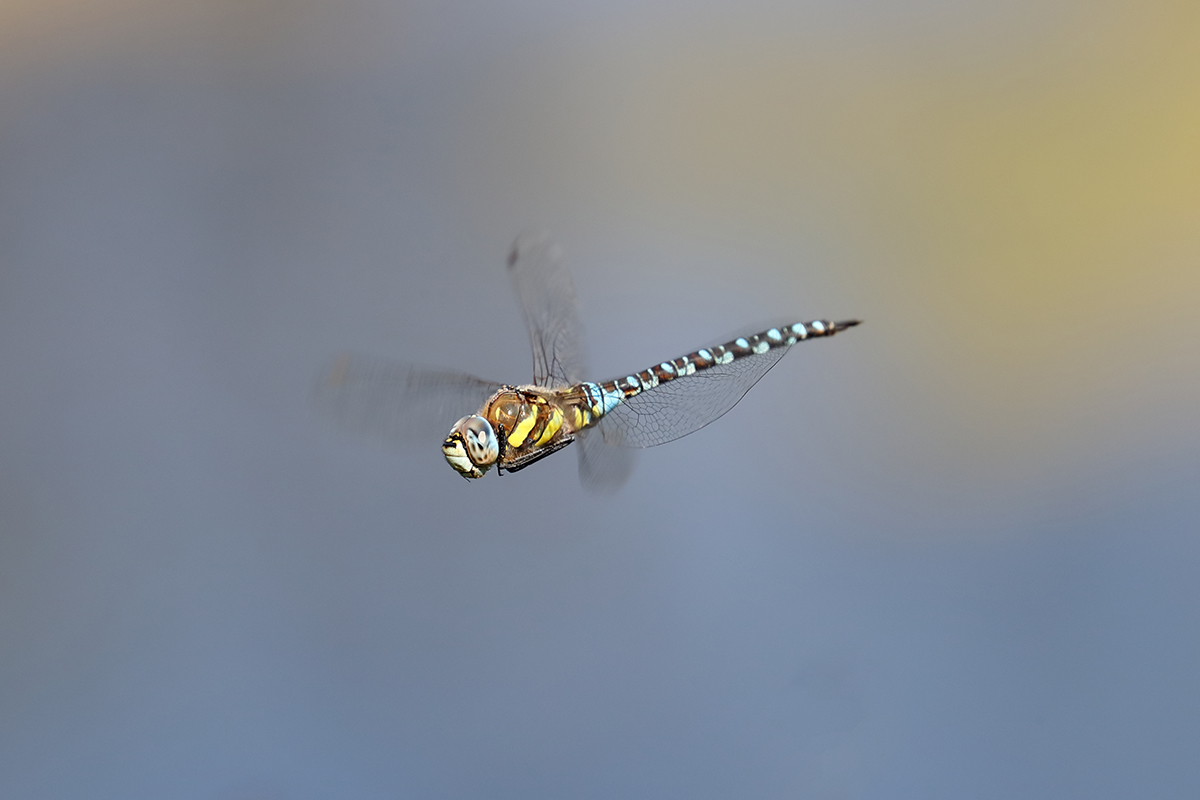
I really enjoy this time of year because of the sheer number of Migrant Hawkers around. Today at Ditchford, there must have been 100+ buzzing around the margins, with several pairs in-cop and ovipositing. They are very territorial and clash quite readily where territories cross. Their habit of hovering makes in-flight shots fairly easy. Also seen were Brown Hawkers, Common and Ruddy Darters and Common Blue Damselflies.

The Willow Emerald is still present at Boardwalks Nature Reserve in Turkey according to Trisha Thompson. I visited with Trisha last Friday and managed to find it after about 1 hour of hunting. During my visit, I also recorded Southern Hawker, Brown Hawker, Migrant Hawker, Ruddy Darter, Common Darter, Blue-tailed and Common Blue Damselflies. Interestingly no normal Emeralds, although Trisha confirmed they are present on some of the ponds. I understand another Willow Emerald has been recorded at Kings Dyke in Peterborough, so there is clear a few in the area. Where else I wonder?

Ruddy Darter at Ditchford

Common Darter at Boardwalks LNR

Migrant Hawker cleaning itself from cobwebs

Migrant Hawker


Migrant Hawker

Thursday, 25 August 2016

Willow Emerald Damselfly at Peterborough

I had a phone call from Trisha Thompson with a query about a potential Willow Emerald Damselfly at Boardwalks Nature Reserve in Peterborough. Trisha thought it was a Willow Emerald, and I agreed. I sent Trishas's photos to Adrian Parr who confirmed the ID. Trisha returned today and saw it again - her photo is below. I hope to visit the site soon as this is a great westerly record for thisspecies and it may appear at other sites with Willow trees around pools and ponds. Anyone in the area, please keep an eye out. Willow Emeralds don't tend to show the blue pruinesence of the common Emerald, and more characteristically have large pale pterostigma compared to dark pterostigma in the common species. It may appear elsewhere in the area.

For myself, I have just returned from Devon and a quick visit to Ditchford showed 150+ Migrant Hawkers, 20 Brown Hawkers and a couple of Emperors including an ovipositing female. I hope to get out more soon. 

Male Willow Emerald Damselfly