Tuesday, 27 April 2010

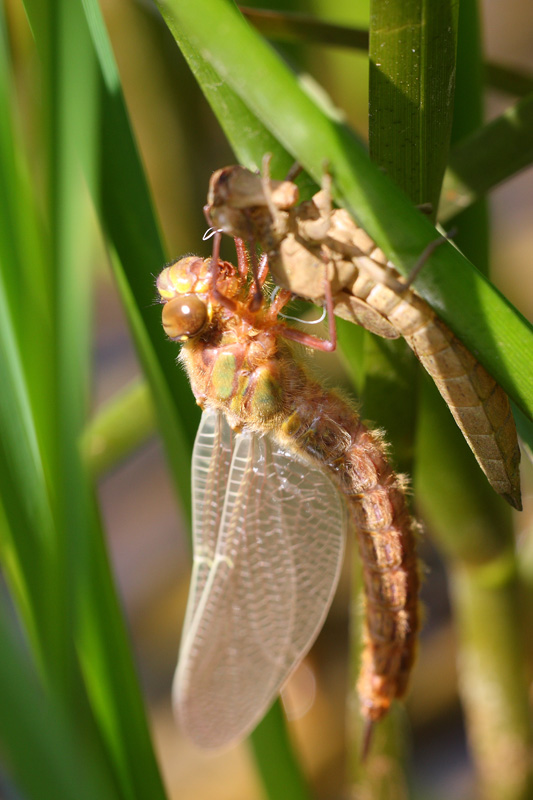
Hairy Dragonfly Emerging


I went back to Southfield Farm Marsh again hoping to photograph some of the Large Reds. They were still playing hard to get and I didn't manage a single shot. However, I did find this emerging Hairy Dragonfly. Sorry about the poor picture - she was so low down among the reeds that this was the best I could get without ruining my work clothes (not great to go to a 1400hrs meeting covered in smelly pond mud!). I have seen Hairys here before, but never been able to prove breeding until now. I bumped into someone who told me that our friend John Showers, who was busy Hoverfly hunting, had seen an Azure Damselfly here earlier. I didn't see it though. Looking at the BDS Hot News page, this is the first Hairy seen this year and with the Azure we have the highest number of recorded species so far this year!

Monday, 26 April 2010

First Large Red Damselflies

Great weather on Saturday prompted a search at Yardley Chase , but nothing was seen except one Emperor larva basking at the water's surface. At lunchtime today, I walked to Southfields Farm Marsh SSSI near work and found 2 emerging Large Red Damselflies. Neither stayed to be photographed but flew straight into the trees surrounding the pond. The weather looks to be getting better during the week, so I will return and see if more are about and I can get that first photo.

Wednesday, 14 April 2010

Dragonflies Appearing in the South

After a harsh winter, the dragonflies are beginning to appear around 1-2 weeks later than in recent years, with Azure Damselfly and Large Red Damselfly seen in Essex and elsewhere. Northants is normally 2-3 weeks after the first sightings, which may mean we are slightly later than normal too. Good weather between now and end of April may change this, so keep an eye out!

Sunday, 4 October 2009

More Red-veined Darters


I visited again, hoping to find some males and again only found females, still they are very attractive and worth seeing. I met Jim D. and we saw 2-3 (it's dificult to tell when they are buzzing around). Also many pairs of mating Common Darter, a few Migrants and Common Blue Damselflies. I had to check all the male Darters just in case they were of the Red-veined variety.

Friday, 2 October 2009

Red-veined Darters turning Red


Graham Bentley shot this picture which shows a male turning red and getting its red veins. I visited today (Friday) to see how they were doing, but the weather was cool and cloudy and I only saw one female (top photo) and no males. I did find 4 emerging though, which is quite something for October.

Sunday, 27 September 2009

Migrant Hawkers at Thrapston Lakes


Still plenty of Migrant Hawkers around at Thrapston Lakes, including this mating pair.

Red-veined Darters


Graham and I found about 4 more Red-veinded Darters today (26 Sept), all of them recently emerged, taking their first flights.

Wednesday, 23 September 2009

More Red-veinded Darters Emerging


Jim Dunkley has sent me these photos from 22 Sept which show a male RvD recently emerged along with its exuvia. Note the bicoloured pterostigma on the wings and the reduced abdominal spines on the exuvia. The blue-grey eyes are not clear, perhaps because this is a very recently emerged adult.

Saturday, 19 September 2009

Red-veined Darters AND Black Darter at Upton


Following the sightings of the Red-veined Darters oviposting at Upton, I have been visiting every week since the beginning of September to see if any adults had emerged. Well, today was the day!. I was with my son and we met Alan who was also looking for them. We were looking for exuviae in the reeds, when we spotted a Black Darter. Whether this is the same one seen by Doug Goddard at Weston Mill last week is not known, but if it isn't it means there may be more elsewhere. I managed to grab a couple of not very good pictures as it didn't settle for long. When we lost sight of it, we hunted in the ditch and noticed that a male Common Darter was attempting to mate with a very fresh looking female. This turned out to be a newly emerged Red-veined Darter. We got some good photos, and went on to see up to two more all of which were being harassed by male Common Darter. On the way back we located two exuviae.
The Red-veined Darters were beautiful (especially compared with the drab Black Darter). The contrast of the blue-grey lower half of the eyes with the red-brown upper part is incredible and the blue-grey really stands out. The coming week may see more emergences. It is expected that these adults will leave and fly south within a few weeks, and will not stay to breed.

Saturday, 12 September 2009

Went to see the Black Darter


I went to Weston Mill pond today, but must have missed the Black Darter. As compensation, I got this shot of a Migrant Hawker and a pair of oviposting Common Darter.

Black Darter Confirmed


Bob B., Darryl S., Nick R. and Graham B. visited the Mill pond on 11 Sept. and saw the Black Darter again, with further photos taken by Bob (above). My visit today (12 Sept) couldn't find it - it must have heard I was coming. Steve Cham has confirmed what we all believe, that it is an wandering Black Darter. But where doid it come from?

Thursday, 10 September 2009

Is this a Black Darter??


Doug Goddard has sent me these two images that show a "Black" darter seen at Abington Meadow pond near Weston Mill. Is it a Black Darter (the first for Northants), a very very mature Ruddy Darter or a melanistic Darter.?? I have never seen one like this before. If it is an aged adult, I would also expect the wings to show signs of age too.

Friday, 28 August 2009

Migrant Hawkers


We have recently returned from our family Holiday in South Devon, where we saw Gold-ringed Dragonflies, without really looking for them. My first local trip was to Ditchford on 27 August. Here there were 50+ Migrant Hawkers, many at territory allowing me to practice my in-flight photography techniques. These are two of my favourites.

Sunday, 2 August 2009

Stanwick Lakes


Common Blue Damselflies were busy fighting for what few females were available, although there were few males around to be honest. The above photos show a single male in flight and a group of males hovering around a submerged female. Also, in amongst the Common Blues was a single Small Red-eye, a first for Stanwick Lakes, a few Black-tailed Skimmer, Common Darter and a single male Emperor.